As exciting as parenting can be, it can be challenging, too. The joys of coos and cuddles is often mixed with the anxiety of managing new unknowns – the need for regular childhood checks, immunisations, their first cold or ear infection. To add to the confusion is the overabundance of advice from family, friends or conflicting information that you may read online. Talking to your GP throughout this period is so important – we are here to help you through the maze. Hopefully this guide sheds some light on the journey ahead.
It is reported that 90% of your child’s brain development occurs before they turn five. These early days set the foundation for future growth and development. This is why it is important for your child to have regular health checks from birth. Childhood checks assist in identifying potential issues early, when they can be corrected, rather than waiting for problems to arise later in life, when they may be harder to fix. These checks are necessary even if you feel that your child is developing normally.
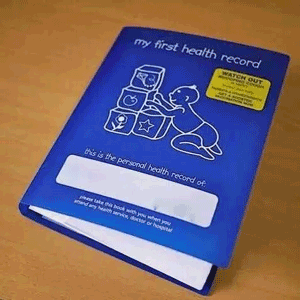
All parents of children born in NSW receive a free copy of the My Personal Health Record (Blue Book).
The blue book contains valuable health information for parents and is a place to record your child’s health information, illnesses, injuries, immunisations, growth and development. It is recommended to take your blue book to childhood health checks with your GP from birth up until 4 years of age.
The blue book clearly highlights the timing of each of these childhood checks (birth, 6 weeks, 6 months, 12 months, 18 months, 2 years, 3 years and 4 years).
The focus of each check, questions asked and the advice given to you by your GP will vary as your child develops. Points of discussion for you to consider are included below.
The newborn check is arguably the most important (for both mum and baby). During this visit we discuss issues relating to feeding (breast and bottle), crying, settling and sleep. There are a number of excellent resources which can be shared with you (Australian Breast Feeding Association Guides, Mum2Mum App). It is recommended to book in for a long consultation to ensure all of your questions are adequately addressed.
It is recommended to start solids when your child shows signs of being ready – around 6 months of age but not before 4 months. We assist with this transition by providing education on how to introduce solids and recognise the signs of readiness. Understanding which foods are nutritionally complete and safe is also important – the Solid Starts Database & App is another excellent resource. Your child may also begin to teeth and we can discuss strategies to relieve discomfort.
By 12 months your child is likely communicating in different ways (waving, pointing and trying to talk). They may even be standing or walking. We ensure everything is on track and provide information on recognising delay. By the age of 2, they may become more independent, develop unique personalities and show new emotions such as anger (a period infamously termed the “terrible twos”). We discuss techniques to help you through challenging behaviours, fussy eating and toilet training.
It is important for children to start school healthy and ready to learn. The healthy kids check is a comprehensive visit to ensure your child is ready to start school. We focus on checking growth/vision/hearing, addressing behavioural concerns and providing healthy lifestyle advice.

This is article one of two on this topic by Dr Pooja Rastogi.
The following article would include information on childhood development and immunisations.